- HOME
- Product Information
- Fine Particulates
- Fine particulates for 3D printers (PPS, PA6)
Fine particulates for 3D printers (PPS, PA6)
3D printing is increasingly being adopted as a technology that enables shortening of development periods, mold-less production, and molding of complex part shapes compared to conventional injection molding. Toray offers a lineup of PPS fine particulates TOREMIL® and PA6 fine particulates TORAYPEARL®, equipped with heat resistance and chemical resistance, as high-performance resin fine particulates featuring powder flowability and heat resistance optimal for 3D printing.
Features
Features of PPS fine particulates TOREMIL®for 3D printers
Powder flowability
Has the powder flowability required for 3D printers (Powder Bed Fusion)
Polymer properties
Has polymer properties optimal for 3D printers
Average particle size 50 µm
Has the optimal particle size for 3D printers (Powder Bed Fusion)
Mechanical Properties
Good mechanical properties that can be said to be the highest level among materials for resin 3D printers
Flammability
Has the flammability essential for applications in aerospace, railways, automobiles, etc.
Insulation properties and Heat Resistance
Chemical Resistance
Has characteristics essential for applications in automobiles (EVs, FCVs) and electronic and electrical components
Features of PA6 fine particulates TORAYPEARL® for 3D printers
Powder flowability
Has the powder flowability required for 3D printers (Powder Bed Fusion)
Spherical shape
Effective in improving the surface roughness of 3D printed objects
Average particle size 50 µm
Has the optimal particle size for 3D printers (Powder Bed Fusion)
Mechanical Properties
Has the mechanical properties required for automobiles (intake manifolds, strainers, etc.)
Heat Resistance and Chemical Resistance
Has the mechanical properties required for automobiles (intake manifolds, strainers, etc.)
Reasons to Choose
Reasons to choose TOREMIL®
Compatible with the PBF method, which is increasingly adopted for industrial use
There are multiple methods of 3D printing with different usable materials and characteristics of printed
objects. Among these, TOREMIL® is compatible with the PBF (Powder Bed Fusion) method, which
is the most commonly used for industrial purposes. It is utilized not only for prototyping parts for
functional confirmation but also in the manufacturing of final parts.
The PBF method features the ability to print large objects (460mm x 460mm x 490mm), a high degree of shape
freedom (no support material required to maintain the shape), and the ability to reduce the cost per unit by
printing multiple pieces simultaneously. It is increasingly adopted in various fields as a highly productive
manufacturing method.
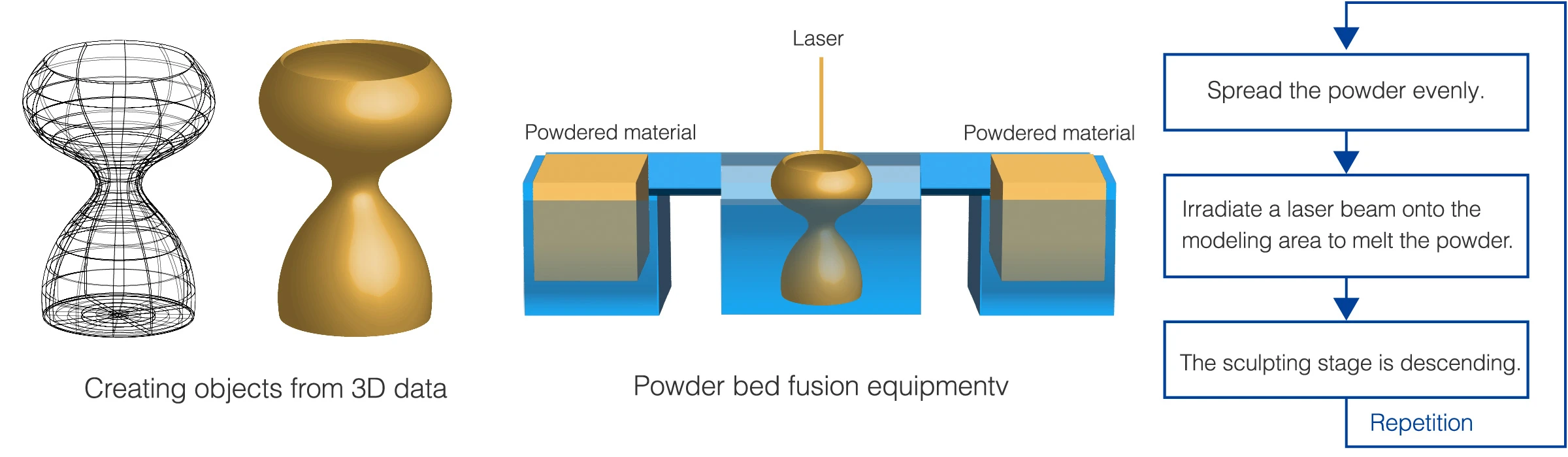
Image of 3D printing by the PBF method
Optimal powder flowability and polymer properties for PBF method 3D printers
PBF method 3D printers work by sending fine particulates stored inside to the printing area using a roller
or blade, spreading them as a thin powder layer with a thickness of about 0.1 to 0.2 mm. The structure
builds the printed object by repeatedly irradiating the powder layer with a laser to melt and solidify it
(melting and solidification), layering numerous layers. Therefore, the powder (material for the printed
object) is required to have high flowability to flow smoothly from the storage section to the printing area,
and the ability to be smoothly melted and solidified by a laser.
Under these circumstances, TOREMIL® has powder flowability optimal for PBF method 3D printers
and polymer properties suitable for melting and solidification.
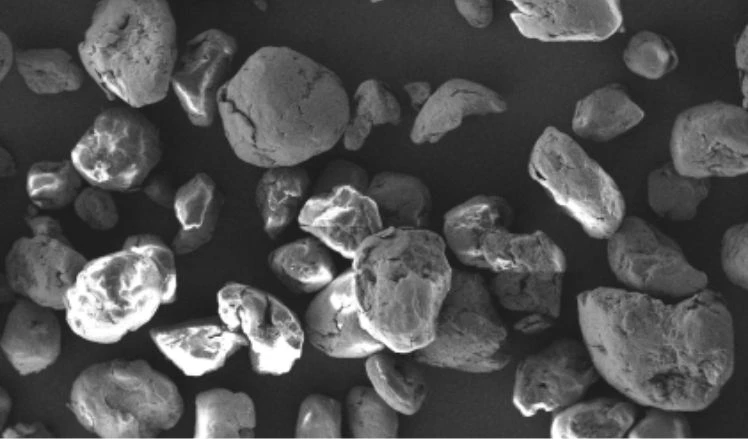
TOREMIL® particle shape
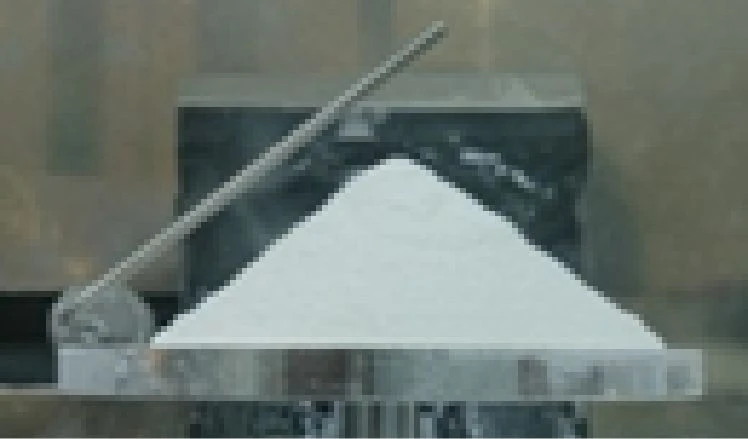
TOREMIL® particle flowability
Mechanical properties of TOREMIL® printed objects
TOREMIL® (PPS) is a super engineering plastic with excellent electrical properties (insulation), chemical resistance, flammability, heat resistance, and low water absorption. In particular, because it has good mechanical properties that can be said to be the highest level among materials for 3D printers, its adoption is advancing as a material for functional prototype parts and final parts of PP/ABS injection-molded products, focusing on complex shapes such as manifolds and piping that are not simple shapes.
| Item (X direction) | TOREMIL® PPS | PP/ABS injection molded products | |||
|---|---|---|---|---|---|
| Unfilled | GF 25% reinforced PPS | CF 20% reinforced PPS | Filler compounded | ||
| Melting point (°C) | 280 | 280 | 280 | 165 | |
| Flexural | Modulus (MPa) | 3,300 | 5,200 | 4,000 | 4,000 |
| Strength (MPa) | 63 | 91 | 92 | 41 | |
| Tensile | Modulus (MPa) | 2,100 | 6,200 | 6,300 | - |
| Strength (MPa) | 49 | 66 | 71 | 25 | |
| Density (g/cm3) | 1.22 | 1.47 | 1.38 | 1.22 | |
| Deflection temperature under load (°C) 【1.8MPa】 | 123 | 237 | 247 | - | |
| Deflection temperature under load (°C) 【0.45MPa】 | - | - | - | 133 | |
| Coefficient of linear expansion (x10-5/K) | 5.5 | 3.2 | 3.0 | - | |
| Flammability (UL 94) | V-0 equivalent | V-0 equivalent | V-0 equivalent | Non | |
| Powder recycling rate (%) | 80 | 70 | 50 | - | |
Reasons to choose TORAYPEARL®
Spherical shape contributing to quality improvement and total cost reduction
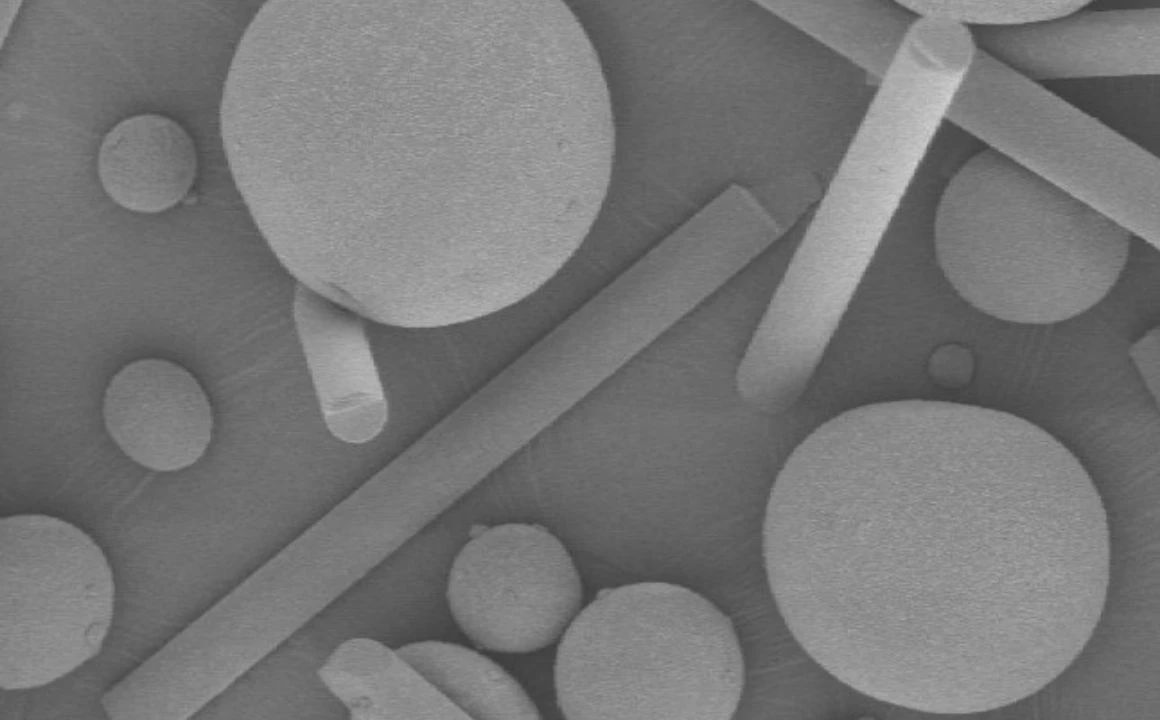
TORAYPEARL® (PA6) is a spherical PA6 particle with an average particle size of about 50
µm. While general resin particles have irregular shapes, TORAYPEARL® has good powder
flowability suitable for PBF method 3D printers because it is spherical. It also achieves high filling
during layering. Because the surface smoothness of the printed object can be enhanced, post-processing
can be reduced, contributing to total cost reduction.
In addition to these, we also have a lineup of grades compounded with fillers* taking
advantage of high flowability. Among them, we offer glass fiber (GF) reinforced grades with excellent
mechanical properties.
*Filler: Material added to the resin that becomes the powder (material for printing) for the purpose of improving the strength of the final product, etc. Carbon fiber, glass fiber, etc.
Mechanical properties covering from prototyping to final parts
TORAYPEARL® (PA6) has higher heat resistance than other materials for 3D printing. Therefore,
the output printed objects suffer less fatigue from high temperatures and maintain their mechanical
properties even in long-term durability tests at 110°C. For this reason, it can be applied not only to
prototyping parts for functional confirmation but also to final parts.
In addition, high recyclability is also a feature. As an example, in the GF reinforced grade, about 50% of
the powder after use can be reused. This characteristic contributes to the reduction of material costs
during repeated printing, reduces environmental impact, and contributes to productivity improvement.
Mechanical properties and heat resistance of PA6 printed objects
| Item (X direction) | TORAYPEARL® PA6 | ||
|---|---|---|---|
| GF 30% reinforced | |||
| Printed object properties | Flexural modulus (MPa) | 5,200 | |
| Flexural strength (MPa) | 108 | ||
| Tensile elongation (%) | 3.7 | ||
| Tensile strength (MPa) | 64 | ||
| Charpy impact strength (Notched : kJ/m2) | 3.1 | ||
| Surface roughness (µm) | 10 | ||
| Density (g/cm3) | 1.33 | ||
| Deflection temperature under load (°C) | 0.45MPa | 217 | |
| 1.8MPa | 183 | ||
| Printed object fatigue properties | 110°C×800h | Tensile elongation (%) | 3.9 |
| Tensile strength (MPa) | 59 | ||
| 160°C×50h | Tensile elongation (%) | 3.1 | |
| Tensile strength (MPa) | 62 | ||
| Powder recycling rate (%) | 50 | ||
Applications
Main applications of TOREMIL®
It is used in various applications, including functional prototypes for next-generation mobility such as xEVs and FCVs, ICE, and water applications.
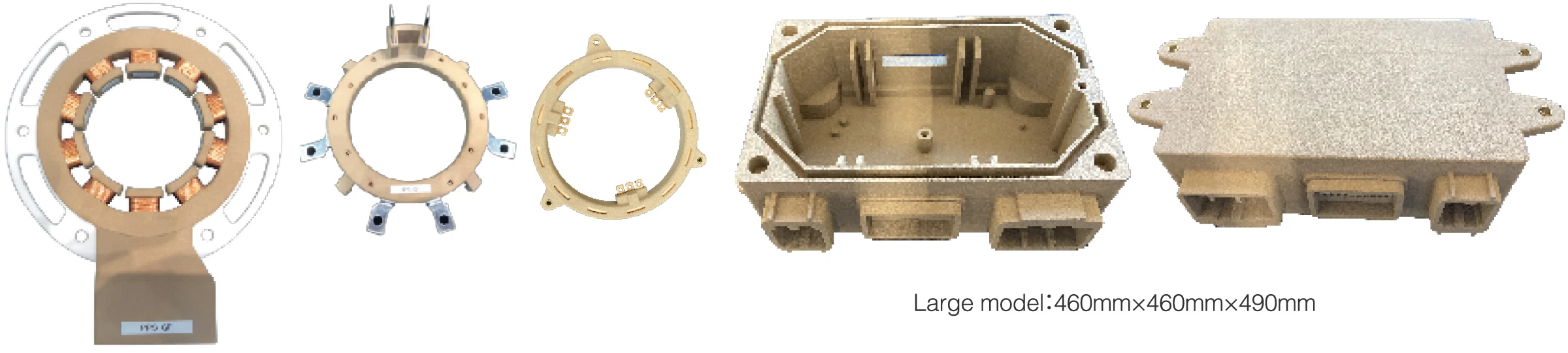
Prototype evaluation of EV-related components (motor insulators, bus bars, cases, water jackets, etc.)
TOREMIL® has a large track record of adoption as a prototype part for functional evaluation, particularly for motor-related components of automobiles and industrial equipment. Above all, it is frequently utilized for prototype evaluation of motor-related components, which is highly evaluated for its high deflection temperature under load, excellent electrical properties (volume resistivity 10^13 Ωcm, dielectric breakdown strength 14 kV/mm), low water absorption, and chemical resistance. In addition, compared to conventional injection molding methods, the cost can be suppressed to about 10%, and the manufacturing period can be significantly shortened.
Prototype evaluation of water pumps
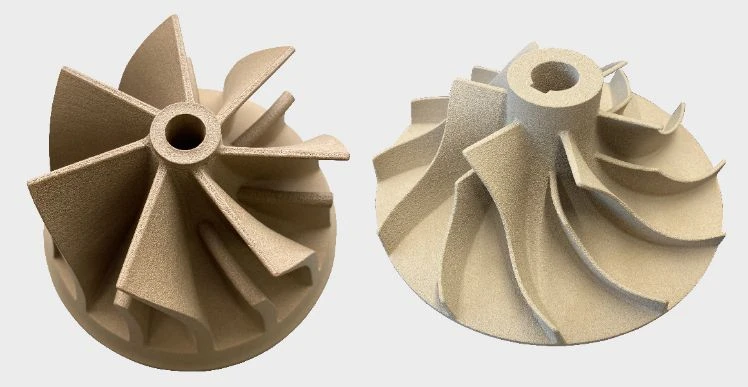
TOREMIL® is also utilized in prototype parts for functional confirmation of impellers for
water pumps installed in automobiles and ships. Because 3D printing can handle complex shapes and
features a high deflection temperature under load, chemical resistance, and low water absorption, it was
adopted for prototyping metal parts even though it is a resin material.
As a result, compared to the conventional prototyping process of welding machined parts using metal, the
cost can be suppressed to 50% and the manufacturing period can also be shortened.
Toray resin's solutions for PPS printed objects (Combination of 3D printing and machining)
Toray resin is advancing proposals not only for materials for 3D printing but also for PPS printed
objects.
3D printed objects have the disadvantage that their surface roughness and dimensional accuracy are
somewhat rougher compared to injection molding, but accuracy is guaranteed by machining the necessary
parts after printing. It is lower in cost than machining all parts, realizing a surface roughness of Ra
1.6-3.2 µm and dimensional accuracy of ±0.05 mm after additional machining.
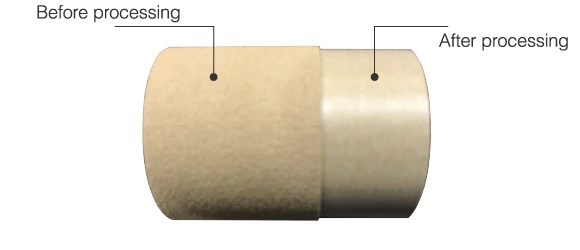
| Accuracy | As printed | After additional machining |
|---|---|---|
| Surface roughness | Ra15-20µm | Ra1.6-3.2µm |
| Dimensions | ±0.2 mm (Target) | ±0.05mm |
*Accuracy varies depending on shape and dimensions. The above are reference values, not guaranteed values.
Main applications of TORAYPEARL®
Intake manifolds, strainers, etc.
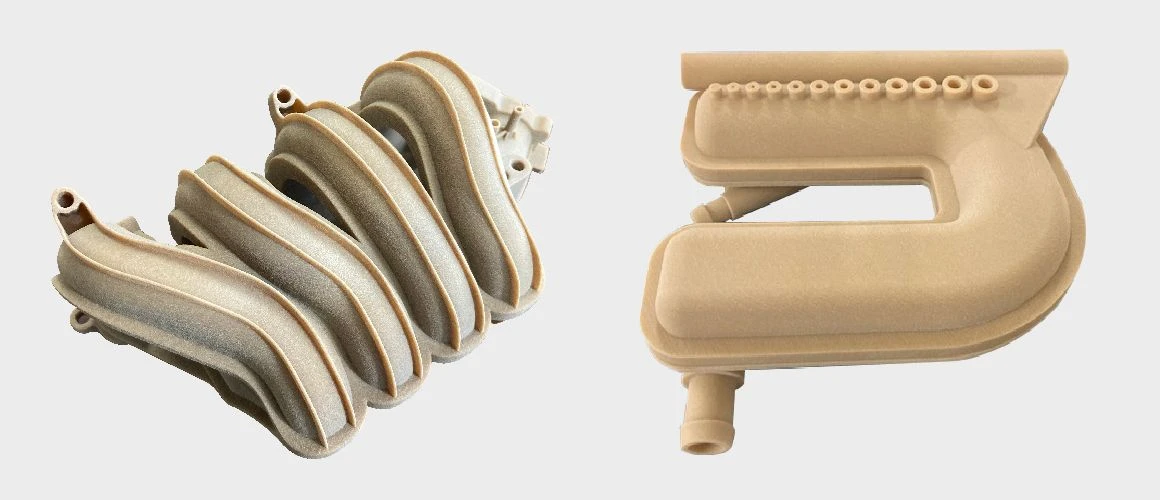
PA6 and PA66 (injection molded products) have a large track record of adoption in intake manifolds and
strainers used around automotive engines.
These components require high heat resistance, and printed objects using TORAYPEARL®
(PA6) exhibit a high deflection temperature under load of 217°C (0.45 MPa) and also have high
surface smoothness, allowing the polishing process for finishing to be omitted. Due to these
characteristics, TORAYPEARL® printed objects, which enable short delivery times and low
costs, are utilized in the prototyping process.
Power tool housings
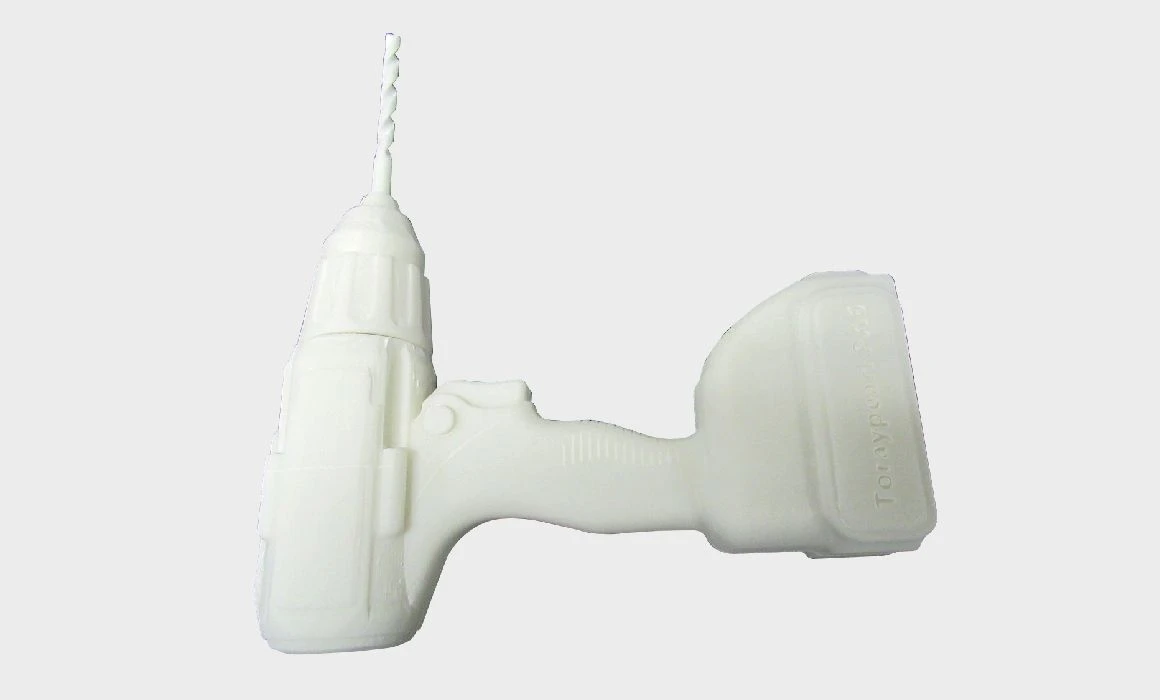
TORAYPEARL® (PA6) is also utilized for housings for power tools.
PA6 printed objects have good Charpy impact strength (notched) and flexural modulus, and exhibit a high
deflection temperature under load. Therefore, they are optimal for housings that require impact
resistance, mechanical strength, surface smoothness, and heat resistance. In addition, high surface
smoothness can reduce the polishing process of joints, contributing to efficiency.
Download
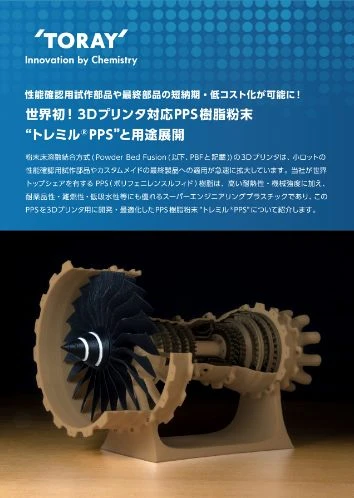
Enabling short delivery times and low costs for prototyping parts for functional confirmation and final parts! World's first! High-performance polymer particulates "TOREMIL® PPS" for 3D printers and their application development
We introduce the high-performance polymer particulates "TOREMIL® PPS" developed and optimized for 3D printers (powder bed fusion method). It is mainly used for prototyping for functional confirmation of high-mix low-volume production and final parts.
Enabling short delivery times and low costs for prototyping parts for functional confirmation and final parts! 3D printed PPS objects for motors and water-related components
We introduce functional prototype parts for motors and water applications that utilize the characteristics of PPS, such as heat resistance, chemical resistance, electrical properties, and low water absorption. By utilizing a 3D printer, there are advantages such as shorter delivery times and lower costs compared to existing manufacturing methods.
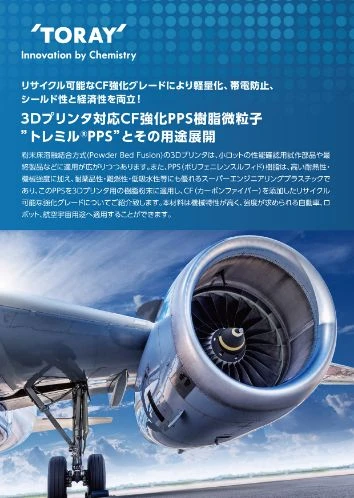
Achieving both lightweighting, antistatic properties,
shielding properties, and economy through recyclable CF-reinforced grades!
High-performance CF-reinforced polymer particulates "TOREMIL® PPS"
for 3D printers and their application development
We introduce a reinforced grade in which CF (carbon fiber) is added to PPS for 3D printers.
It can be applied to automotive, robotics, and aerospace applications that require mechanical
properties.
Achieving post-processing free with high-rigidity, high-heat-resistant, and high-quality 3D printed objects! High-performance spherical polymer particulates "TORAYPEARL® PA6" for 3D printers and their applications
We introduce the high-performance spherical polymer particulates "TORAYPEARL® PA6"
developed and optimized for 3D printers (powder bed fusion method).
It contributes to the reduction of post-processing due to the high surface smoothness and airtightness
of 3D printed objects. It is mainly used for prototyping for functional confirmation of high-mix
low-volume production and final parts.
