They are spherical nylon fine powders developed by Toray. They provide not only the specific properties of
polyamide such as heat resistance and chemical resistance, but also have a uniform particle size, smooth
surface, and excellent dispersiveness, exhibiting a smooth sliding property and unique flexibility.
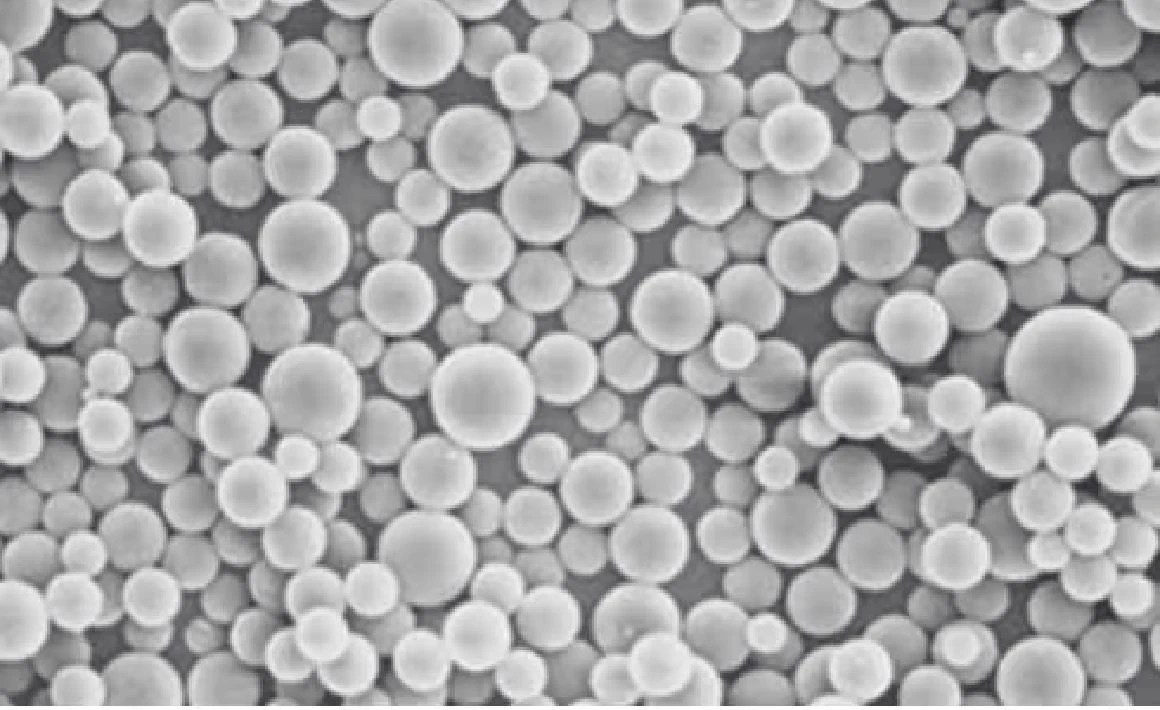
Uniform size and shape from all directions stabilize product quality.
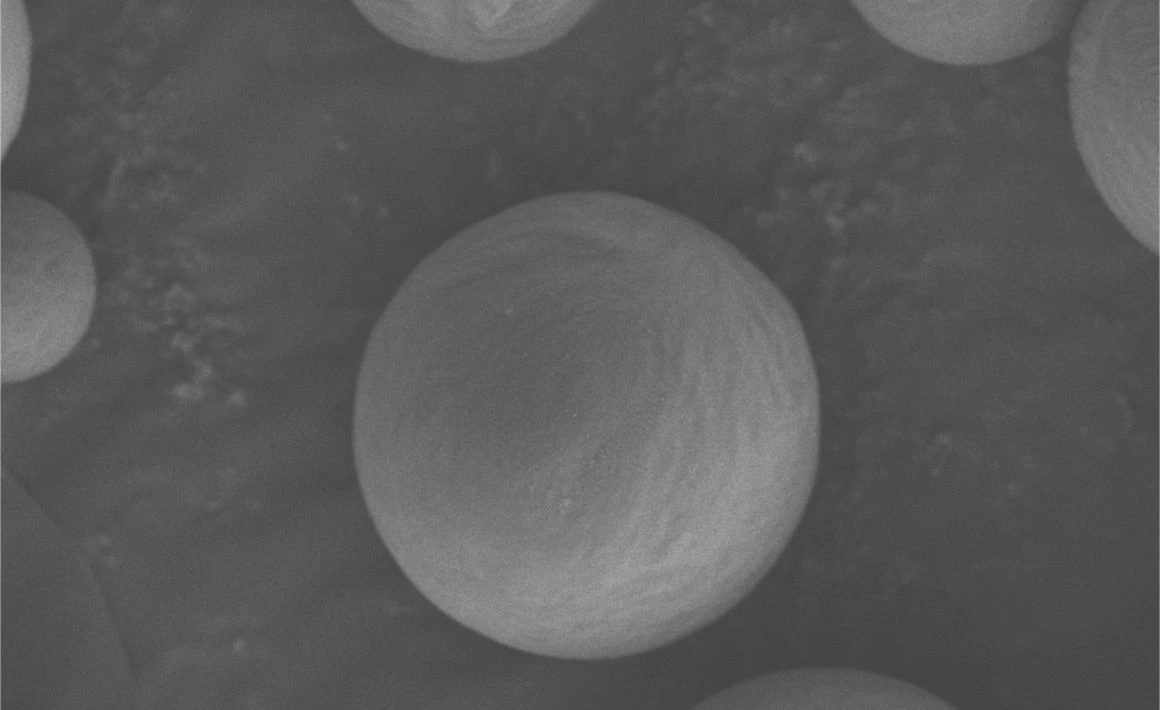
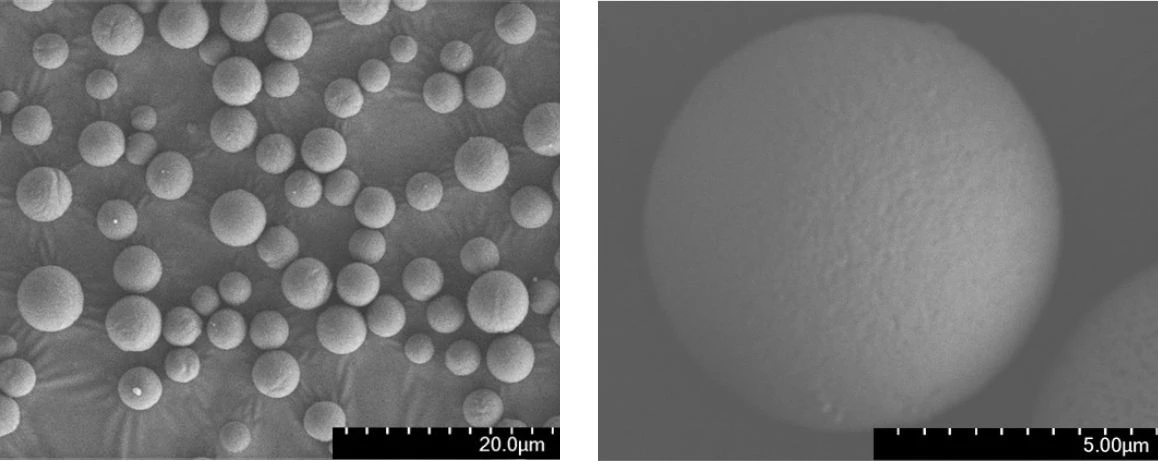
Smooth particle surface
The smooth particle surface minimizes friction and contributes to good spreadability and
smoothness.
Sharp particle size distribution
Because the particle size is uniform, product quality is stabilized. Since it does not contain
coarse particles, it also contributes to good dispersiveness.
Dispersiveness
With excellent dispersiveness, a uniform finish can be obtained in cosmetics and paints.
Two particle lineups
There are two lineups: SP500 with an average particle size of 5 µm and SP10 with 10 µm.
Reasons to Choose
Spherical particles with sufficient spreadability and smoothness
We realized the production of spherical particles through our proprietary polymer design technology. The
particle surface is also smooth, and it has a very regular particle shape.
Having a smooth spherical shape minimizes friction and contributes to good spreadability and smoothness.
Due to these features, it has proven track record as a sensory improver in the cosmetics field spanning
many years.
SEM image of PA12
Sharp particle size distribution (uniform particle size) contributing to dispersiveness and quality
stability
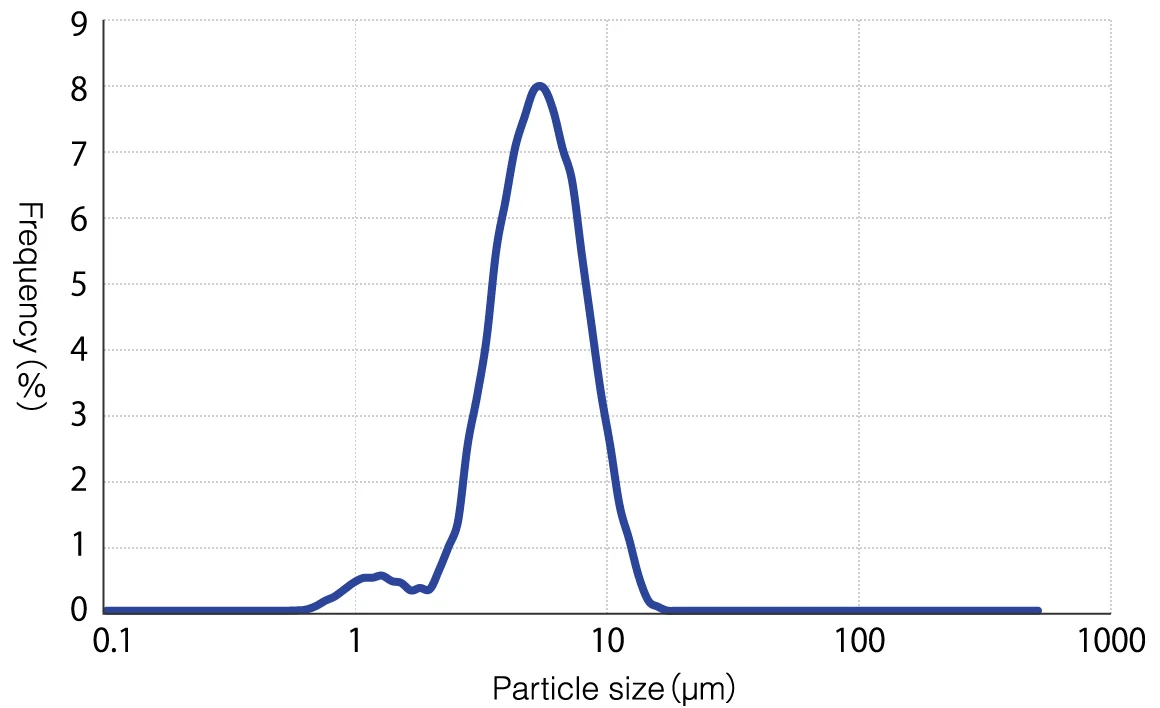
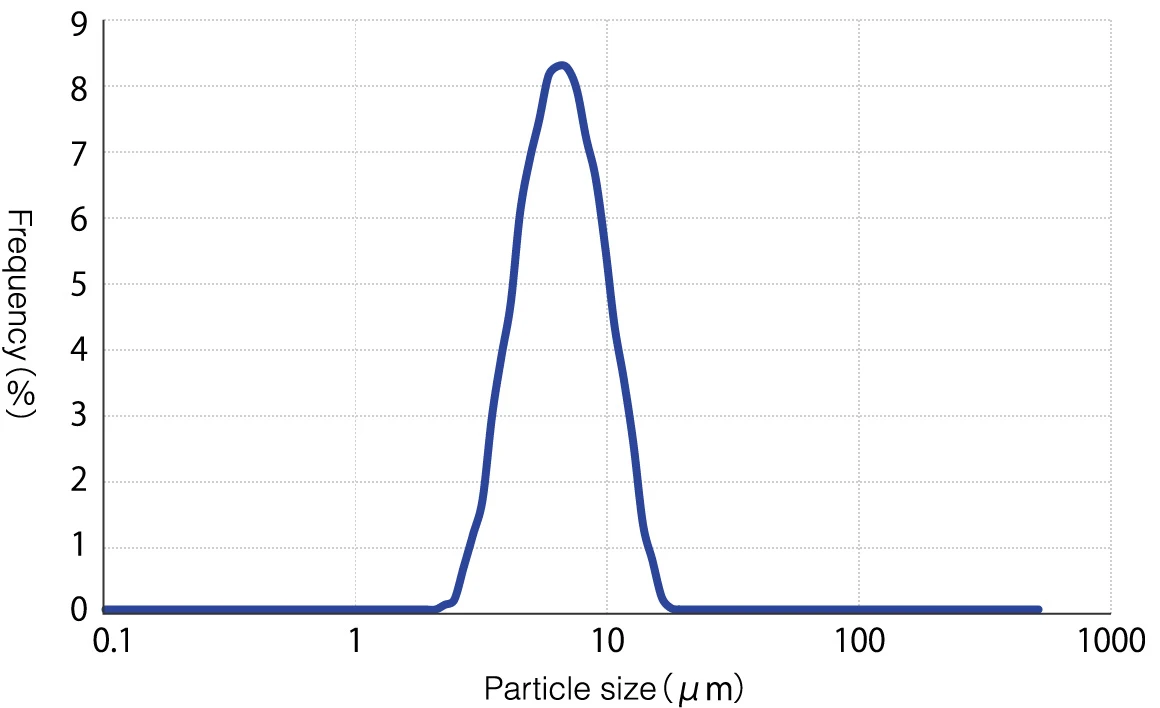
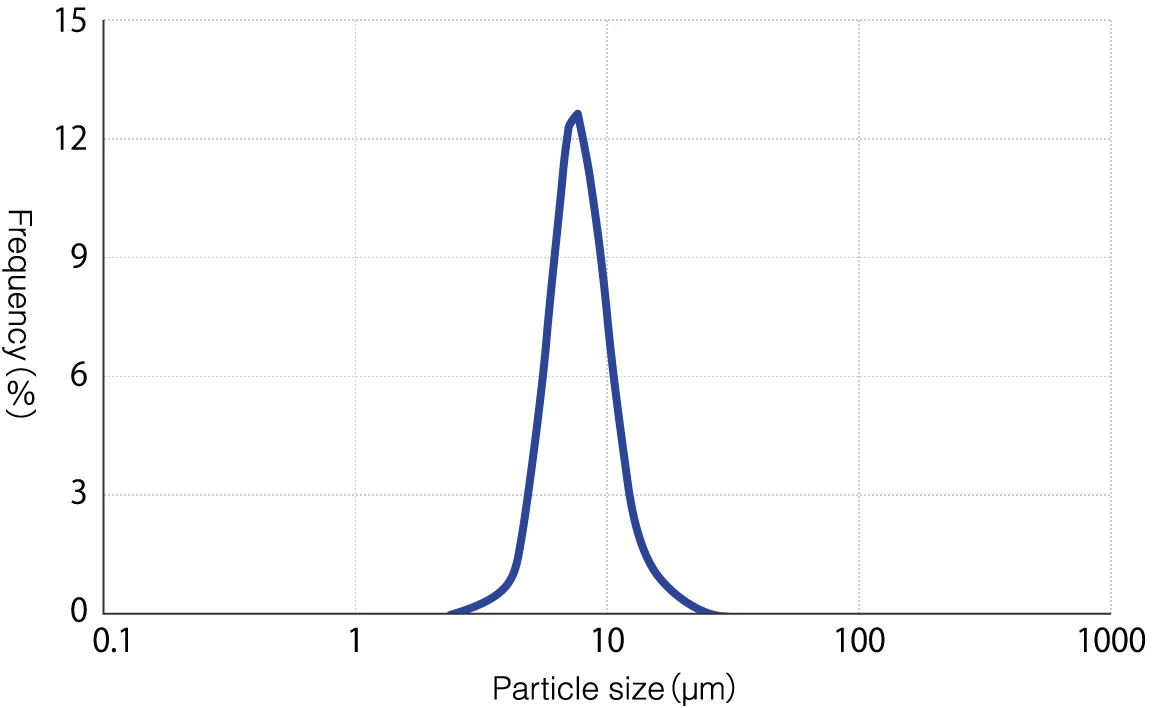
It exhibits a very sharp particle size distribution and has a uniform particle size. For this reason, it
has excellent dispersiveness and stabilizes product quality, making it suitable for cosmetic applications,
anti-blocking agents for films, semiconductor encapsulants, and adhesives. We offer two grades with
average particle sizes of approximately 5 µm (SP500) and 10 µm (SP10).
Particle size distribution of Nylon 12 fine particulates SP500
Particle size distribution of Nylon 12 fine particulates SP10
Property values of SP500 and SP10
Item
SP500
SP10
Average particle size
5~6µm
7~10µm
Specific gravity
1.02
1.02
Melting point
165°C~171°C
165°C~171°C
Bulk density
4.5ml/g
3.2ml/g
Water-soluble content
0.5% or less
0.4% or less
Ignition residue
0.5% or less
0.5% or less
Aqueous suspension pH
6.0~8.0
6.0~8.0
Arsenic
1 ppm or less as AB203
1 ppm or less as AB203
Heavy metals
10 ppm or less
10 ppm or less
Refractive index
1.53
-
Modulus
1.12GPa
-
10% Compressive displacement strength
40MPa
-
Dielectric loss tangent
0.0082
-
Dielectric constant
2.293
-
*This data represents typical measured values obtained under specific conditions and is not a guaranteed
value.
Applications
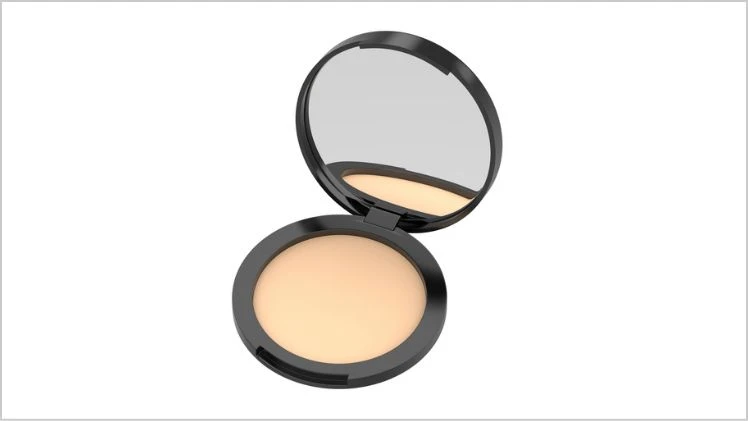
Cosmetics
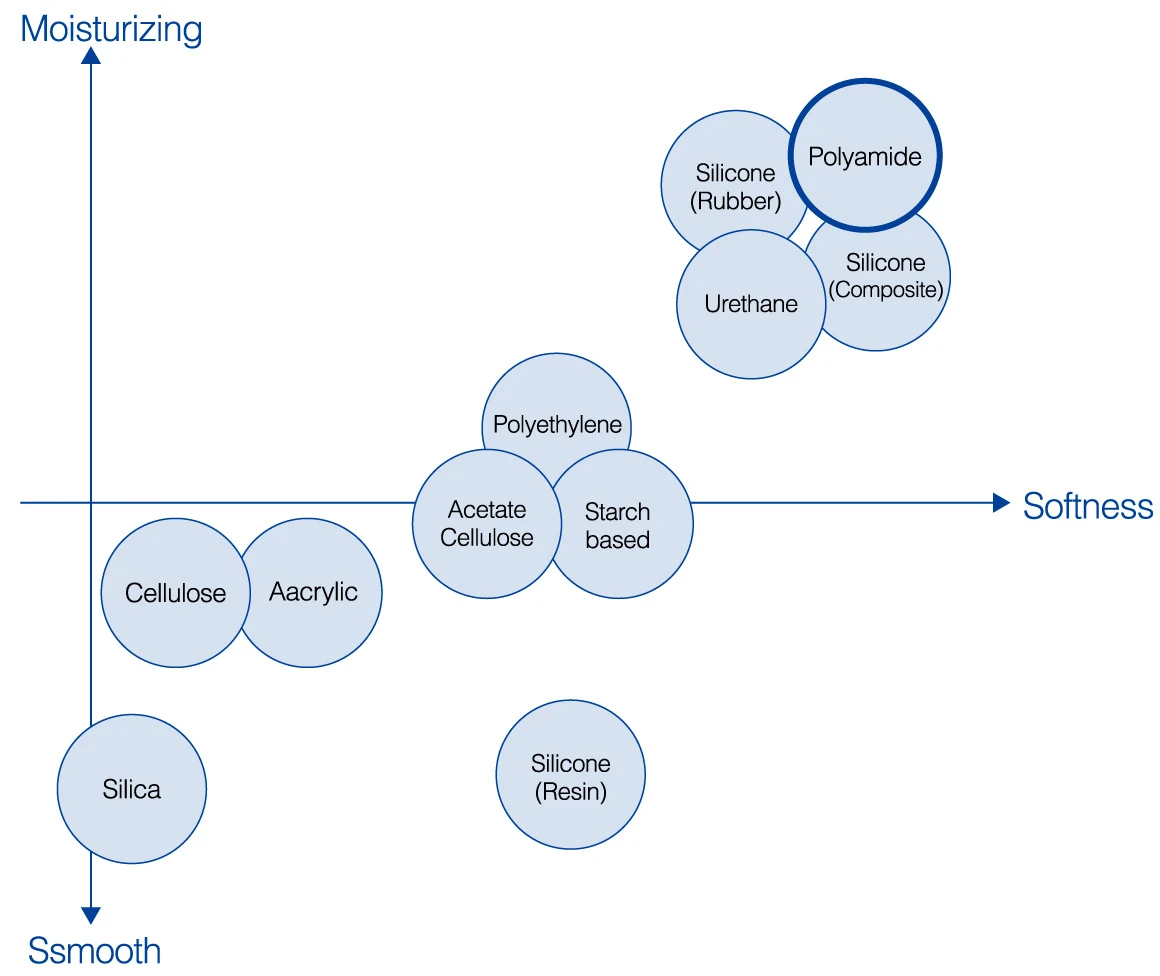
Nylon 12 fine particulates (PA12) have a history of over 50 years as sensory improvers in cosmetics.
Among the particles used as sensory improvers, they are evaluated as being particularly excellent in
providing a "moist feel" and "softness" to the final products, and are widely used in applications
such as foundation, color cosmetics, sunscreen, hair spray, and creams.
Positioning of cosmetic powders
Source: Created by Toray based on "Current Status and Future Prospects of the Fine Powder Market
2023" by Fuji Chimera Research Institute, Inc.
In 2024, we developed Nylon 4 fine particulates (PA4) with marine biodegradability as an alternative to
microplastic beads for cosmetics, which are increasingly regulated in Europe. While this product exhibits
the same sphericity and particle size distribution as Nylon 12 fine particulates (SP500), it has been
confirmed to show sufficient biodegradability by the OECD 301F* test.
*OECD 301F: A type of biodegradability test specified in the OECD test guidelines. If 60% or more
biodegradability is confirmed in 28 days, it is determined to be "readily biodegradable."
PA4 (development product) SEM image
PA4 (development product) particle size distribution
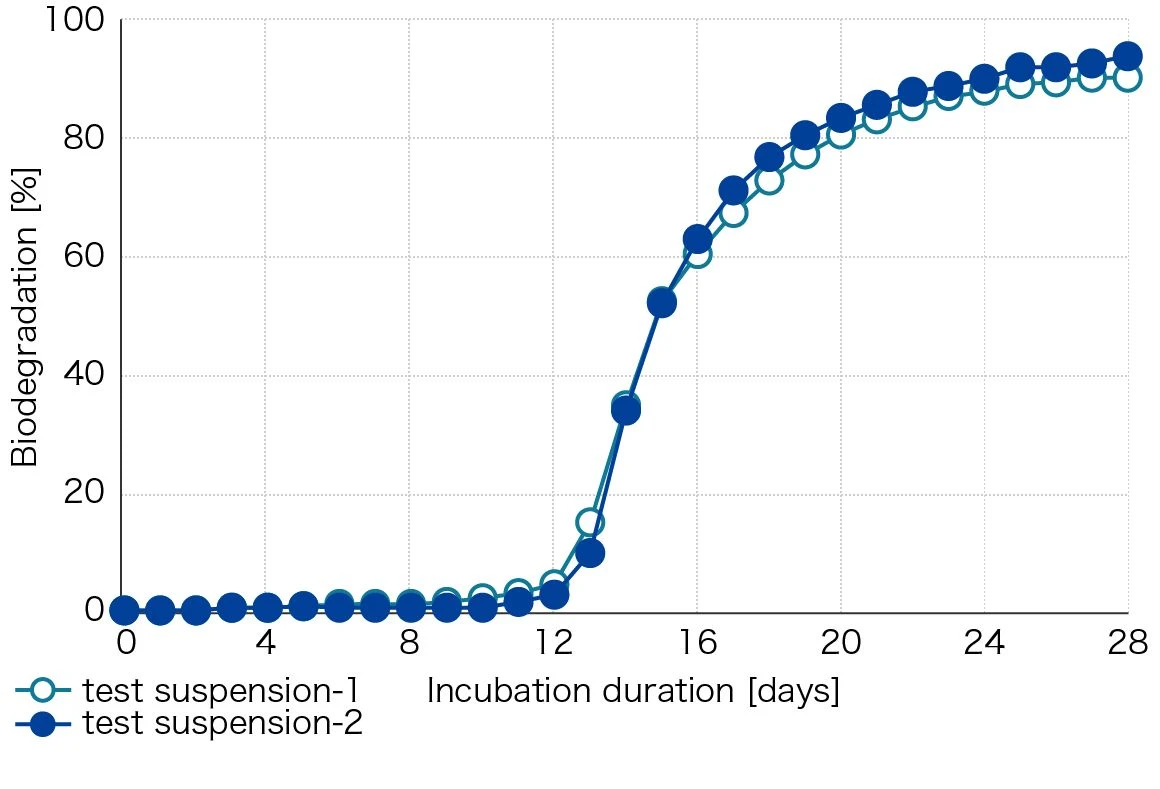
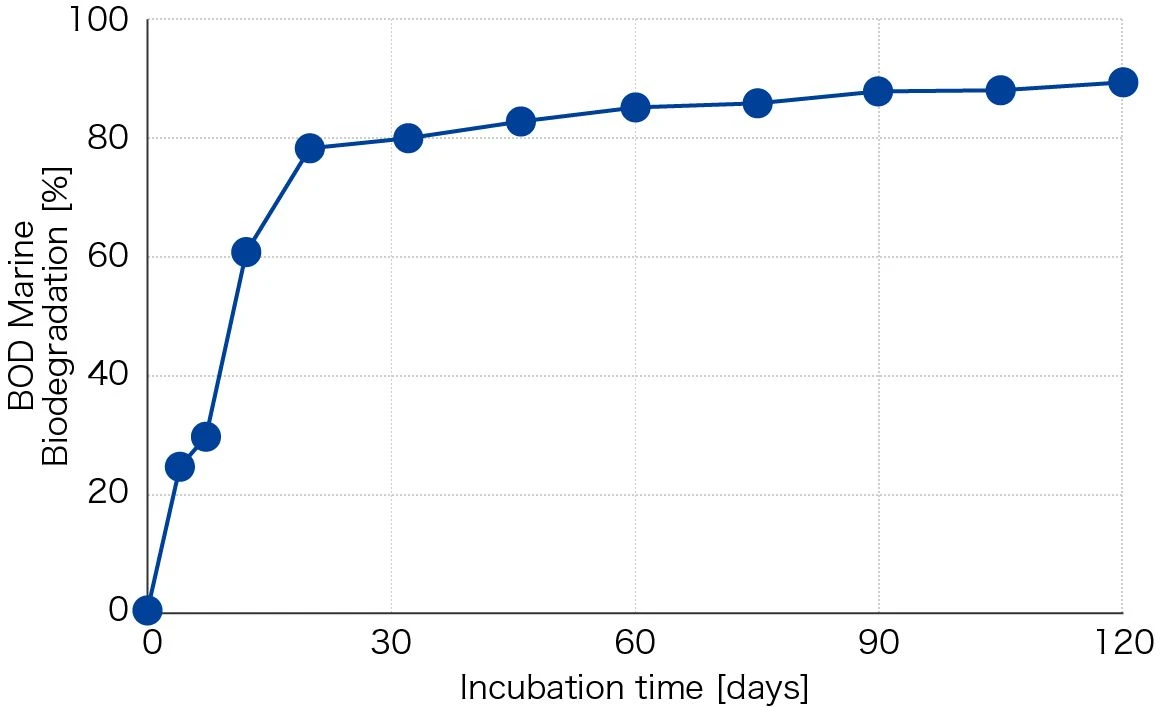
PA4 (development product) confirmation of biodegradability
Biodegradability (OECD 301F)
In activated sludge, if it is decomposed by 60% or more in 28 days (N2), it is recognized as
"readily biodegradable."
→PA4 (development product) confirmed high biodegradability of about 90% in 28 days.
Marine biodegradability (ASTM D6691)
Confirmation of biodegradability in the ocean, which has fewer microorganisms than activated sludge.
→PA4 (development product) confirmed biodegradability exceeding 90% in 120 days.
Industrial products
Leveraging the characteristics of the particle shape, which is spherical and has a uniform particle size,
as well as the heat resistance, chemical resistance, and softness that are characteristics of polyamide,
its adoption in industrial applications is also expanding. Main application examples include the
following.
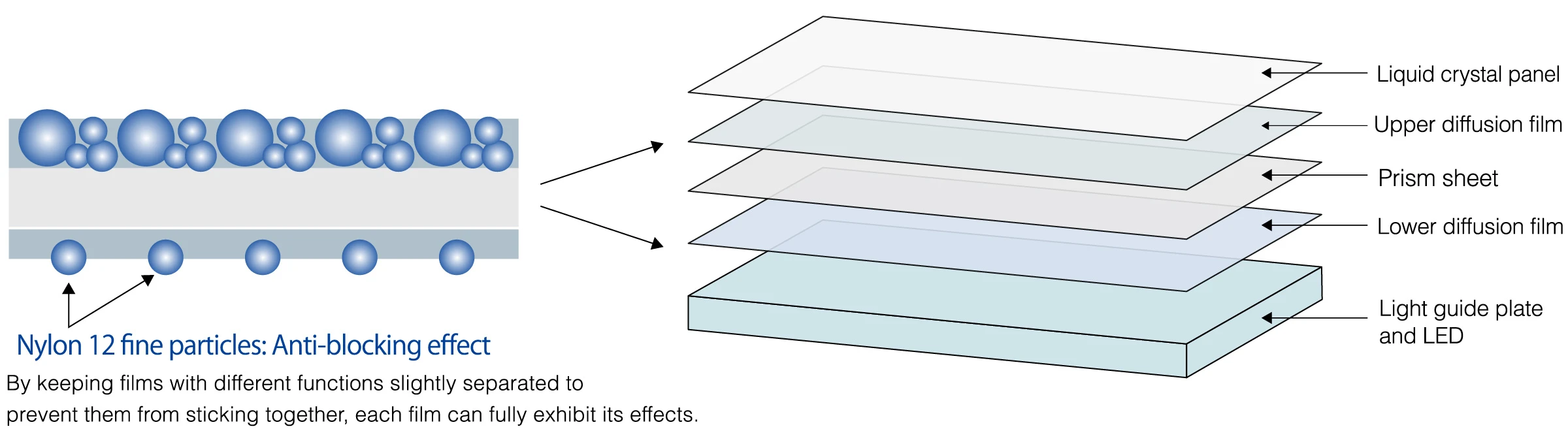
Anti-blocking agent for films
Semiconductor encapsulants and adhesives
Inks and paints
OA rubber rolls
Image of PA12 utilization as an anti-blocking agent for films
Image of PA12 utilization in sealing/adhesion including conductive adhesives